
AfriSIG 2025: “Where policy, activism and African realities converge”
Defining Africa's future in the global information society begins with developing its internet governance leaders today.
Take advantage of our cutting-edge and multidisciplinary curriculum, delivered by African and global internet governance, human rights and development experts.
Join our dynamic network of African internet governance leaders from diverse sectors, backgrounds and ages who are shaping the future of the ICT landscape for Africa's development.
AfriSIG was recognised in 2017 amongst the outstanding ICT initiatives involving international and regional cooperation by the World Summit on the Information Society (WSIS) Prize Committee.

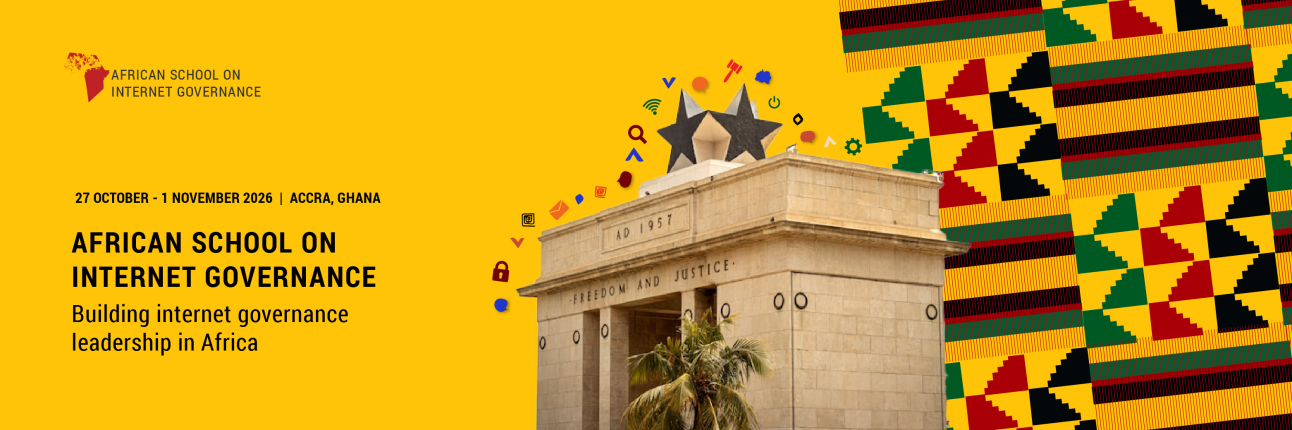
The 14th annual African School on Internet Governance (AfriSIG 2026), Accra, Ghana

The African School on Internet Governance (AfriSIG) is an initiative of the Association for Progressive Communications (APC), the Information Society Division of the African Union Commission (AUC) and Research ICT Africa (RIA).

AfriSIG 2026 will be convened in Accra in the final quarter of 2026, in collaboration with the Africa Internet Governance Forum (IGF) Secretariat, hosted by the United Nations Economic Commission for Africa, and in close partnership with the United Nations IGF Parliamentary Track and the host of the 2026 Africa IGF, the Ministry of Communications, Digital Technology and Innovation of Ghana. 

In addition to providing an overview of internet and digital policy, in Africa and globally, AfriSIG 2026 will focus on the governance of artificial intelligence (AI) in the African context. 

For more information on #AfriSIG26, contact the AfriSIG organisers, Anriette Esterhuysen and Peace Oliver Amuge, at afrisig@apc.org

About AfriSIG26

AfriSIG26 will take place over the course of five days as an intensive residential, interactive learning and leadership development event.

The curriculum will include:

  • Artificial intelligence: AI for development, safety and security, AI and the military, data governance and protection, environmental impacts of AI, and trends in AI strategy and regulation, with a focus on the African Union Continental Artificial Intelligence Strategy and selected national AI strategies. AI innovation models such as small AI, tiny AI and public AI will also be examined.            
  • Digitalisation, sustainable development, and digital inequality and inclusion.                      
  • The internet governance ecosystem from multilateral and multistakeholder perspectives.       
  • The African institutional context at national, regional and continental levels, including the AU and its Digital Transformation Strategy, Regional Economic Communities, and regional bodies such as the African Network Information Centre (AfriNIC) and the African Commission on Human and Peoples' Rights. 
  • Roles and responsibilities of governments, parliaments, intergovernmental forums, UN agencies (e.g. UNESCO and the ITU), regulators, civil society, the private sector, academia and the technical community. 
  • Open internet architecture, infrastructure, standards, protocols, and the management of internet names and numbers. 
  • Data governance: Data protection, security, data flows, sovereignty and localisation, with special emphasis on the African Union Data Policy Framework.      
  • Internet governance and social issues: Gender, human rights, political participation and access to information.    
  • Cybersecurity, trust and safety.            
  • Platform regulation: Self-regulation, national regulation, misinformation and disinformation, transparency, data protection, advertising and monetisation, and cross-border content regulation and jurisdiction. 
  • Emerging issues such as the digital economy and labour, the environmental impact of technologies, digital sovereignty, and the geopolitics of internet governance.    
  • Current processes and debates, including the WSIS+20 review outcome document; implementation of the Global Digital Compact, including the CSTD Working Group on Data Governance; the Independent International Scientific Panel on Artificial Intelligence; the Global Dialogue on AI Governance; and other relevant developments.

AfriSIG 2026 practicum

For the 14th edition of AfriSIG, the practicum will focus on a task that supports the participation of diverse stakeholders in the harmonised implementation of the AU Continental AI Strategy, through a development and "just AI" lens, drawing on Research ICT Africa's Just AI Framework.

The 2026 call for applications and nominations will open soon. Be on the lookout!